Enabling Wireless M‑Bus Communication: Platforms, Requirements & Certification

The Wireless M‑Bus Stack is the ideal solution for Smart Metering, Sub‑Metering, and Smart City applications. In part one of our technical Wireless M‑Bus insights, we explored the stack’s features, supported standards, and available variants. This second part focuses on the hardware required to enable Wireless M‑Bus communication in devices, as well as the certification options available for compliant products.

Microcontrollers, Transceivers & System-on-Chip Platforms

The Wireless M‑Bus Stack has already been ported to a wide range of hardware platforms. These include setups consisting of a microcontroller (MCU) paired with a dedicated transceiver (TRX), as well as fully integrated System‑on‑Chip (SoC) solutions. The overview below provides a general impression of the types of hardware suitable for enabling Wireless M‑Bus functionality.

Our list continues to grow with each customer project. If your preferred hardware platform is not included, feel free to contact us – we will evaluate the options with you.

Thumbnail illustrating how to enable wireless M‑Bus communication with hardware requirements and certification aspects

Overview of Wireless M‑Bus compatible hardware
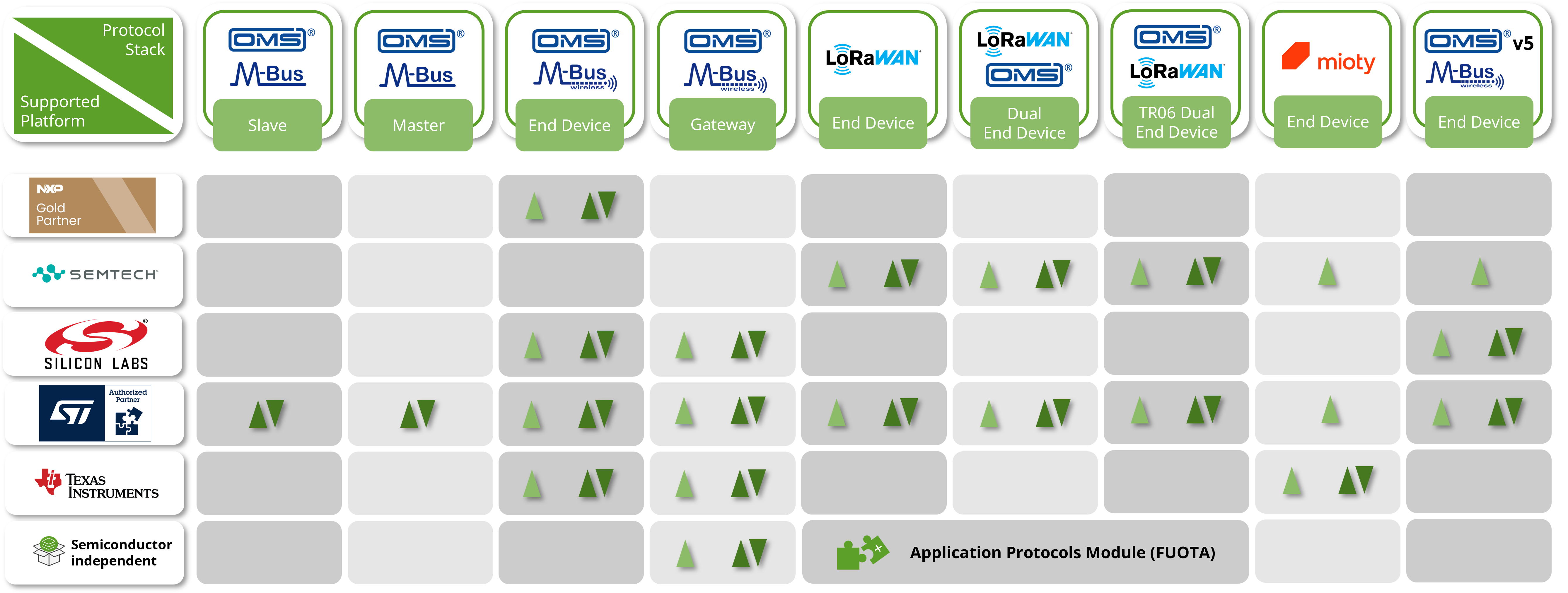
Note: this list is constantly expanding. Additional hardware can be evaluated upon request.

Hardware requirements for the Protocol Stack

To operate reliably on different hardware platforms, the Wireless M‑Bus Stack includes a Hardware Abstraction Layer (HAL). This layer connects all required hardware components to the protocol stack. Depending on the chosen design, the HAL integrates:

  • 1–2 timers
  • 1× SPI interface (for dedicated transceiver-based solutions)
  • 2–4 GPIOs (depending on the transceiver)
  • Software RF interface (for System‑on‑Chip platforms)
  • AES encryption in hardware (if available and applicable)
  • CRC hardware calculation (if available and applicable)
  • Hardware coding support (Manchester, 3oo6 – if available and applicable)
The HAL ensures seamless integration of Wireless M‑Bus functionality across a broad range of silicon options, making it easier for device manufacturers to bring interoperable and energy‑efficient solutions to market.

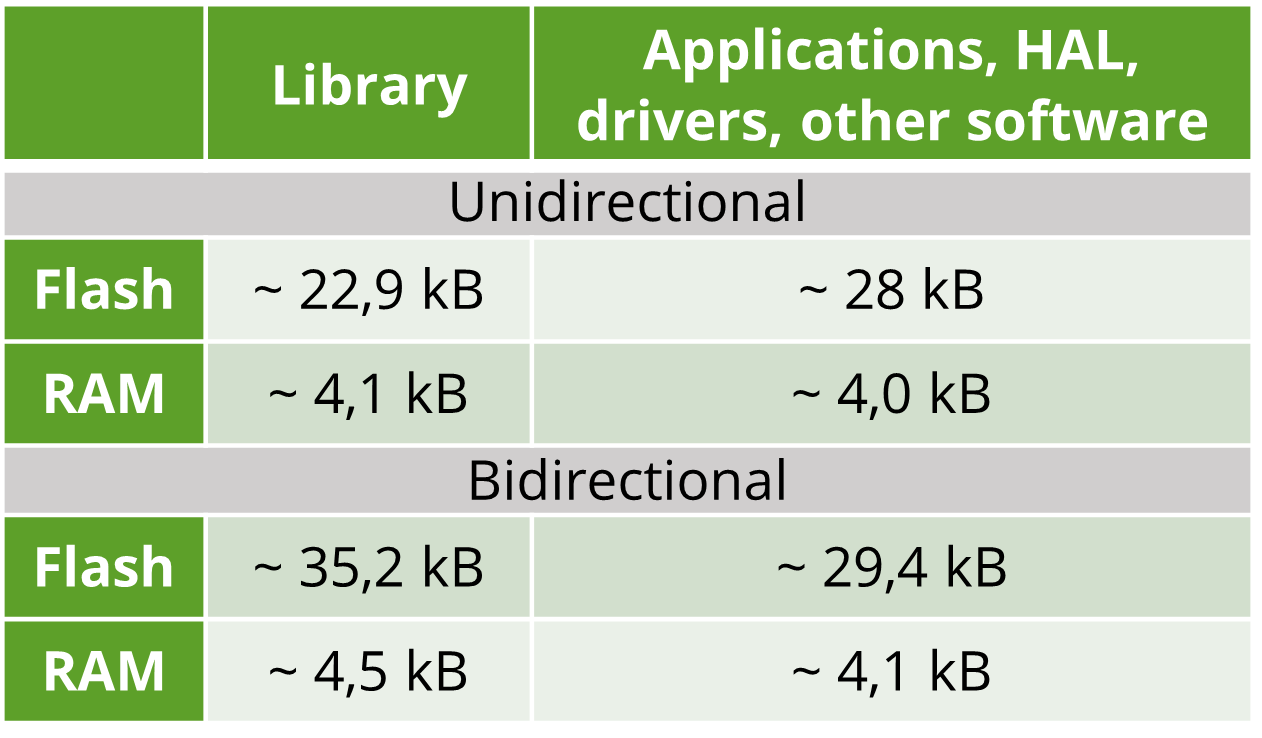
Memory footprint: OMS v4.5.1 End Device Stack, STM32WL5/WLE5
Product Certification – Reliability for Manufacturers & Users

Relying on established standards such as OMS is highly recommended when developing Wireless M‑Bus products. Certification assures all market participants that devices comply with defined norms and interoperability requirements.

OMS certification primarily guarantees cross‑vendor compatibility. For example, an OMS‑certified wM‑Bus receiver from one manufacturer can reliably read data from any OMS‑certified meter, regardless of the vendor.

The OMS certification process is carried out together with DVGW CERT or VDE PZI.

For the Wireless M‑Bus Stack provided by STACKFORCE, certification readiness means that we integrate RF test functions into each of our stacks. These special test modes allow certification bodies – such as TÜV – to validate that the device operates within legal radio specifications. Once the product passes these tests, it can receive the appropriate certification seal.


Explore related Topics and Insights

LinkedIn Icon for STACKFORCE LinkedIn channel

More News on LinkedIn

Thumbnail illustrating the STACKFORCE booth at embedded world 2025 with STACKFORCE staff
STACKFORCE at embedded world 2025 – A look back at an incredible event
embedded world 2025 was a great success for STACKFORCE, showcasing live demos, expert insights and our latest product innovations. From wireless communication technologies to FUOTA, we presented future-ready solutions that drive the embedded industry forward.
Thumbnail illustrating OMS® v5.0.1 Dual Stack as the next generation metering solution combining advanced OMS and LPWAN capabilities
New product: OMS® v5.0.1 Dual Stack now available
STACKFORCE launches the new OMS® v5.0.1 Dual Stack – combining LPWAN UL-S1/S2 and Wireless M-Bus C1 for maximum interoperability, extended range, and future-proof smart metering.
Thumbnail symbolizing smart agriculture with connected sensors and data‑driven farming
Smart Agriculture: Efficiency and sustainability through digital farming technologies
Modern agriculture faces enormous challenges: rising demand, increasing weather extremes, limited resources, growing water scarcity, and intense price pressure. At the same time, markets and society demand greater transparency, sustainability, and efficiency.
Thumbnail illustrating smart industry use cases with connected industrial automation systems
Smart Industry: Robust communication for harsh industrial environments
Connected supply chains and mobile assets demand full transparency and agility. IoT-driven solutions using LPWAN technologies enable energy-efficient, scalable monitoring and control of transport and warehouse processes - anytime, anywhere. This makes smart logistics the foundation for global markets and just-in-time production.