LoRaWAN® specification and how it works
One of LoRaWAN®’s major strengths is its open standardization. Many components are available as open‑source building blocks, making it easy and cost‑efficient to set up private networks. At the same time, LoRaWAN® keeps maintenance costs low and is therefore suitable for a wide range of long‑life IoT applications.
Those who prefer not to manage their own network can rely on public LoRaWAN® infrastructures offered by telecom operators around the globe.
Communication is extremely energy‑efficient, as data is transmitted in small packets that enable multi‑year battery lifetimes. Both unidirectional and bidirectional communication are supported, with integrated end‑to‑end security ensuring data integrity and protection during transmission.
The network structure follows a Star‑of‑Stars topology:
End devices (such as sensors and meters) send their data via gateways to a central network server, which forwards it to the application server where the information is processed, stored and visualized.

LoRaWAN® Use Cases
LoRaWAN® is particularly suitable for transmitting status and operational data from machines, devices and sensors. Typical applications include:
- Condition monitoring in industrial facilities
- Fleet tracking in logistics and transportation
- Infrastructure monitoring (parking, waste management, street lighting)
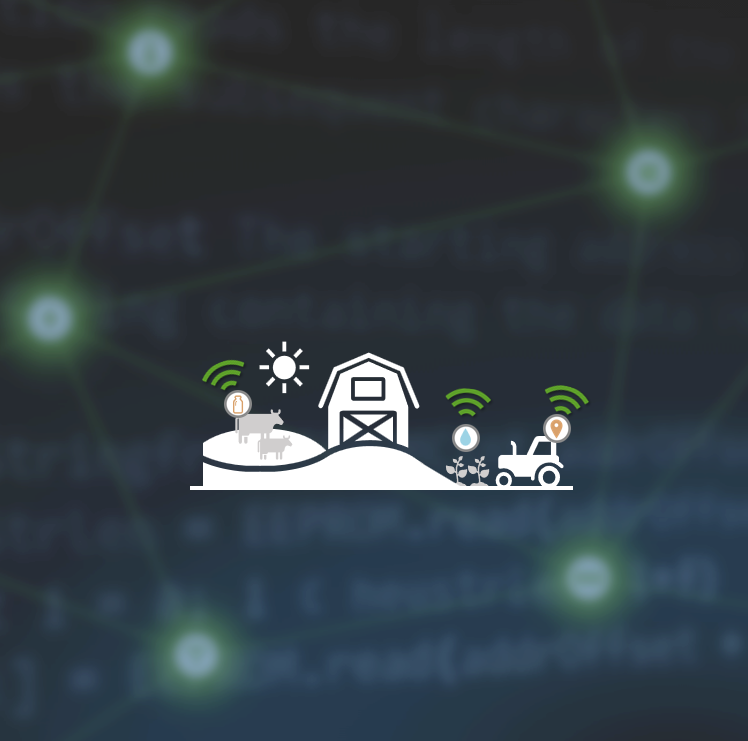
- Smart farming (livestock tracking, irrigation monitoring, soil sensors)
With its long communication range, only a few gateways are required to achieve reliable coverage — even in rural areas. Sensors collect data that can then be used for process optimization, such as automated fence monitoring or improved irrigation systems in agriculture.
LoRaWAN® Protocol Stack by STACKFORCE
The STACKFORCE LoRaWAN® Protocol Stack is an enhanced, industrial‑grade version of the open‑source stack. It is specifically designed for complex environments requiring maximum security, strong performance and long‑term reliability.
As an active member of the LoRa Alliance®, STACKFORCE constantly monitors evolving standards and integrates new features and performance optimizations into its stack at an early stage.
The stack provides:
- Excellent long‑range performance and indoor penetration
- Real‑time availability of measurement data within defined transmission intervals
- Support for absolute values (e.g., meter readings) and real‑time values (flow, power, temperature)
For customers who rely on multi‑technology setups, the stack can be operated as a Dual‑ or Triple‑Stack. In addition to LoRaWAN®, mioty®, Sigfox or Wireless M‑Bus can also be integrated — and switching technologies is possible at any time, even during operation.
All LoRaWAN® Stacks
Seamless device integration for rapid IoT scaling
Integration and deployment
The LoRaWAN® Protocol Stack can be integrated into existing devices using compatible microcontrollers with a radio transceiver or integrated RF interface. With our extensive experience, we support you in developing competitive products that are easy to install, maintain and operate.
Developing your own wireless communication stack in‑house can be costly and risky. That is why STACKFORCE provides standardized, field‑proven software components based on many years of hands‑on expertise.
In-house Software Process
STACKFORCE offers the LoRaWAN® Stack as an “off‑the‑shelf” solution:
- Immediately available or ready to deploy in short time
- Thoroughly tested and simple to integrate
- Flexible licensing packages for predictable budgeting
- Professional support and optional service extensions
With the STACKFORCE LoRaWAN® Protocol Stack, you receive a solid technical foundation for your IoT applications — reliable, secure and economically efficient.