In the dynamic world of the energy and utilities sector, efficient, reliable, and standardized measurement data communication is essential. This is exactly where the Open Metering System (OMS®) comes into play. As a manufacturer-independent and open European communication standard, OMS® enables seamless integration of measurement data across electricity, gas, water, and heat meters.
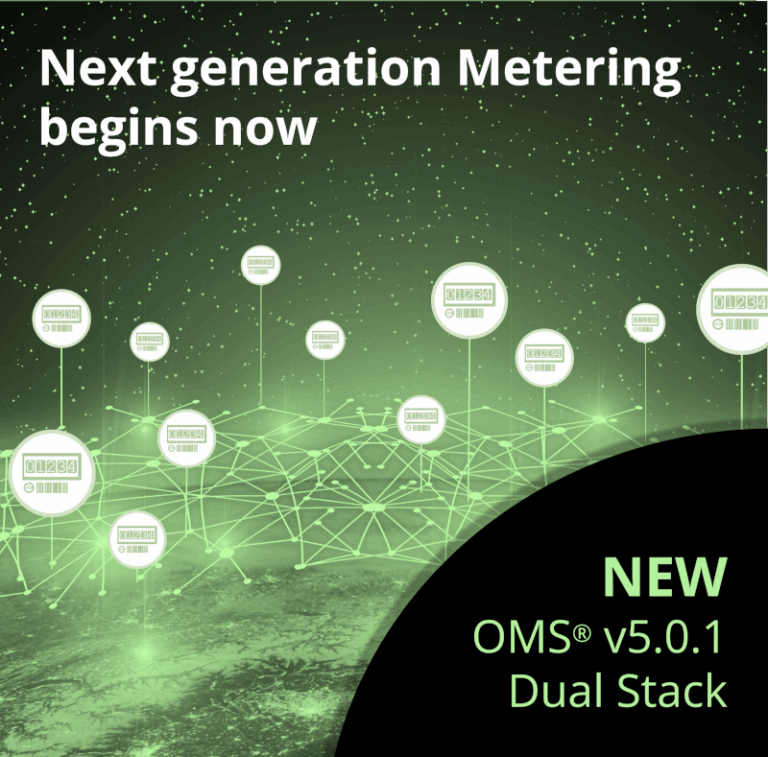
With the introduction of OMS® Generation 5, the standard takes a major step forward—unlocking new levels of interoperability, scalability, and efficiency through LPWAN technology. In this article, we explore how OMS® Generation 5 is shaping the future of smart metering and IoT applications in the utilities industry.

OMS®: A European Standard for Uniformity and Transparency
Developed by the OMS® Group, the OMS® specification defines a unified data format that ensures interoperability between different metering devices and systems. This openness allows utilities and solution providers to freely combine meters, gateways, and software from various manufacturers—without vendor lock-in.
For utilities, OMS® delivers greater transparency, simplified system integration, and long-term investment security. For consumers, it enables fair competition, innovation, and reliable consumption data. This combination makes OMS® one of the most important standards for smart metering across Europe.
OMS® Generation 5: LPWAN for Smart Metering and other IoT Applications
With Generation 5, OMS® introduces interoperable Low Power Wide Area Network (LPWAN) communication tailored specifically for metering applications. OMS® LPWAN is designed for long-range, robust wireless communication with minimal energy consumption—making it ideal for battery-powered meters with long lifecycles.
Beyond classic metering, OMS® LPWAN is also well suited for IoT and Smart City applications, where scalability, reliability, and energy efficiency are equally critical.
OMS® LPWAN Modes: Burst Mode and Splitting Mode
OMS® LPWAN defines two physical layer (PHY) modes to address different deployment requirements:
- Burst Mode for straightforward communication scenarios
- Splitting Mode, based on ETSI TS 103 357 and aligned with mioty® technology
Splitting Mode significantly improves range, robustness, and scalability, allowing data from a very large number of meters to be reliably received by a single base station. This makes it particularly powerful for dense urban deployments and large-scale smart metering rollouts. Read more about this technology!
Scalable, Cost-Efficient, and Future-Proof
Thanks to its high scalability, OMS® LPWAN reduces infrastructure requirements while increasing network capacity. Fewer gateways are needed to collect more data – resulting in lower operational costs and a future-proof investment.
Utilities, solution providers, and end users all benefit from efficient data transmission, long battery lifetimes, and long-term standard compliance.
Conclusion: OMS® Generation 5 as a Foundation for Future Utilities
The Open Metering System® Generation 5 sets a new standard for interoperable, efficient, and scalable measurement data communication. By combining OMS® interoperability with advanced LPWAN technology, utilities can confidently build future-ready smart metering and IoT solutions.
Invest in OMS® LPWAN to ensure your devices and systems are open, efficient, and prepared for tomorrow’s energy and utility challenges.